
Dissemination Activity Report – Introductory Stakeholder Workshop
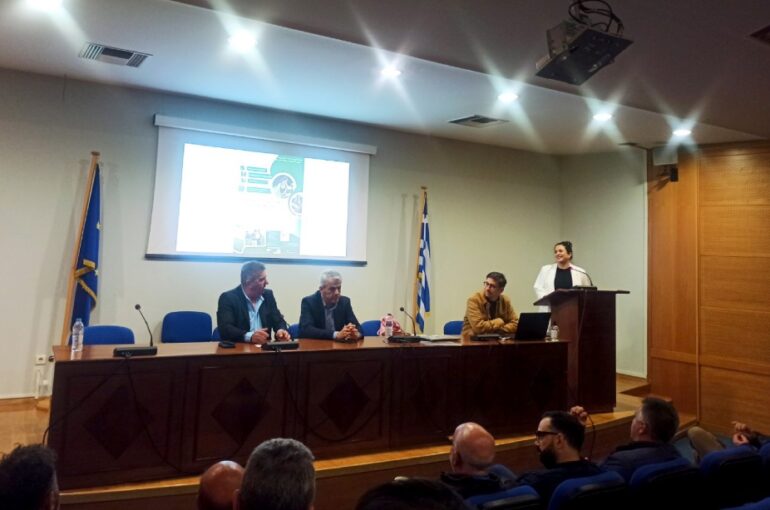
On May 16, 2025, I-BEC, in collaboration with the Region of Western Macedonia, organized an introductory stakeholder workshop in Kozani as part of the “The Greek Living Earth” project. The workshop was designed as an open call to local representatives and professionals of the agri-food ecosystem, with a focus on digital agriculture and soil health management, as well as the mapping of challenges and needs.
A total of 32 participants attended, including agronomists, veterinarians, producers, representatives of farmers’ associations, and local government officials. The session began with two brief presentations: (a) an introduction to the “The Greek Living Earth” project and its objectives for soil health monitoring services and indicators, and (b) practical applications/a case study of digital services for advisors and producers.
The majority of the meeting (over 90 minutes) was dedicated to open discussion. Participants highlighted barriers to the adoption of data and digital tools, described current soil monitoring practices (e.g., basic measurements such as pH), and discussed expectations and concerns regarding schemes linking data to financial incentives. Particular emphasis was placed on the gap between available technologies and their practical application in the field.
The discussions and on-site interviews yielded valuable insights into the perceptions, needs, and priorities of regional stakeholders. Agronomists emerged as the key intermediaries in farmers’ decision-making; regular soil sampling remains limited; skepticism persists about the use of data when tied to payments, while cost and climate risk remain strong concerns. Finally, there was strong interest in practical demonstrations and simple, user-friendly decision-support tools.
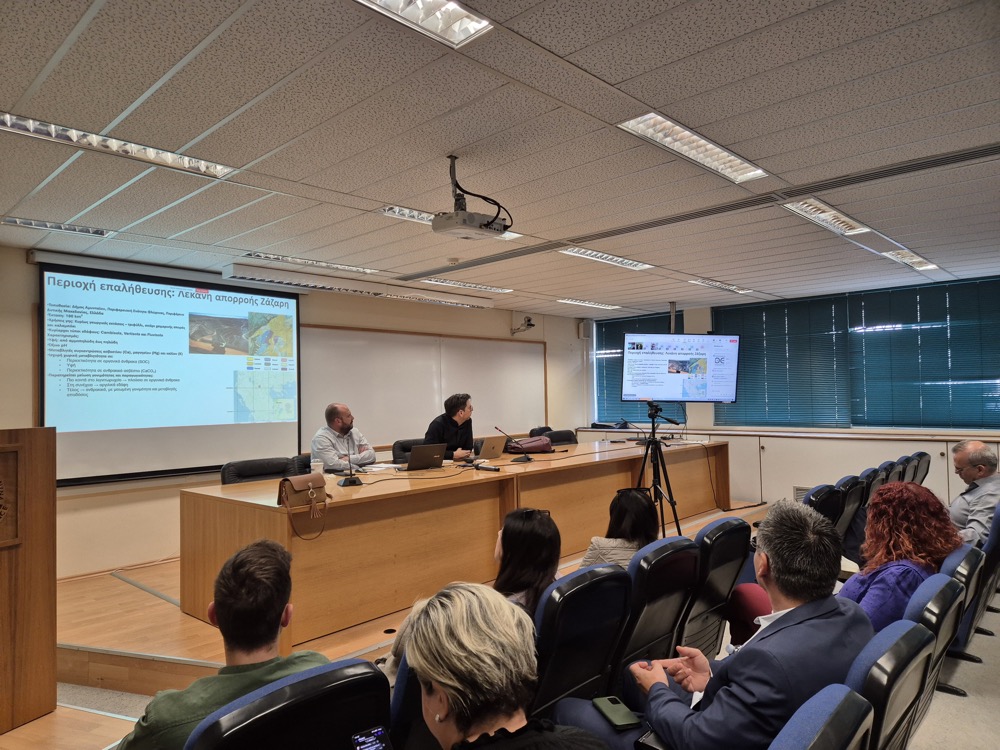
As tangible outcomes, an initial stakeholder registry was created with 32 entries and a first influence map, positioning agronomists at the center. A short questionnaire was distributed, and brief on-site interviews were conducted. At the same time, practical uses of remote sensing indicators for soil health were discussed, aiming to enhance productivity and resilience.
Based on these findings, the project partners will expand the stakeholder registry to include policy makers, producers, research/educational institutions, and businesses. The interview results will be integrated into the design and testing of solutions for soil health within the framework of “The Greek Living Earth.”
For the visibility of the activity, information material and online posts were utilized, as well as a press release to local media, ensuring broader dissemination of the event’s outcomes.


