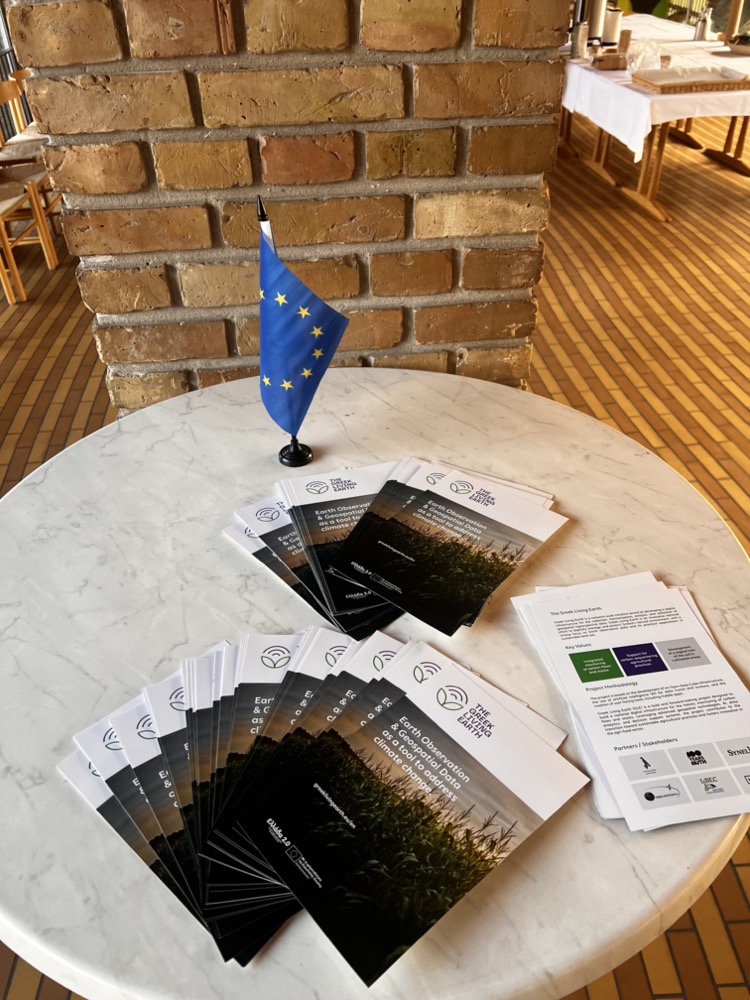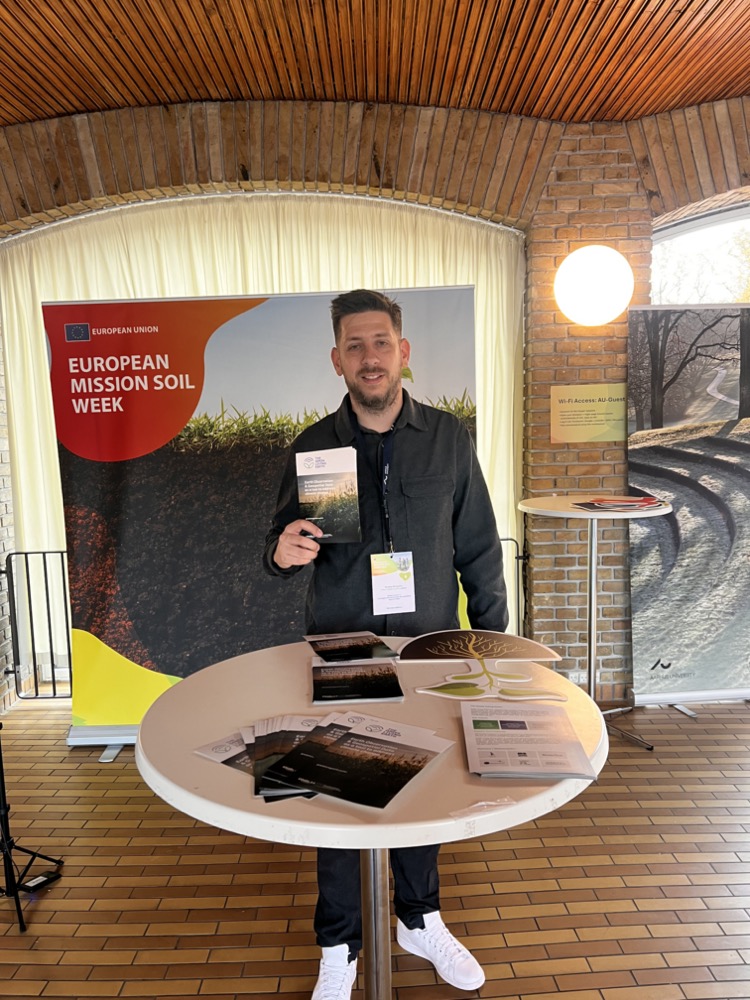
Participation of Greek Living Earth in the European Mission Soil Week 2025
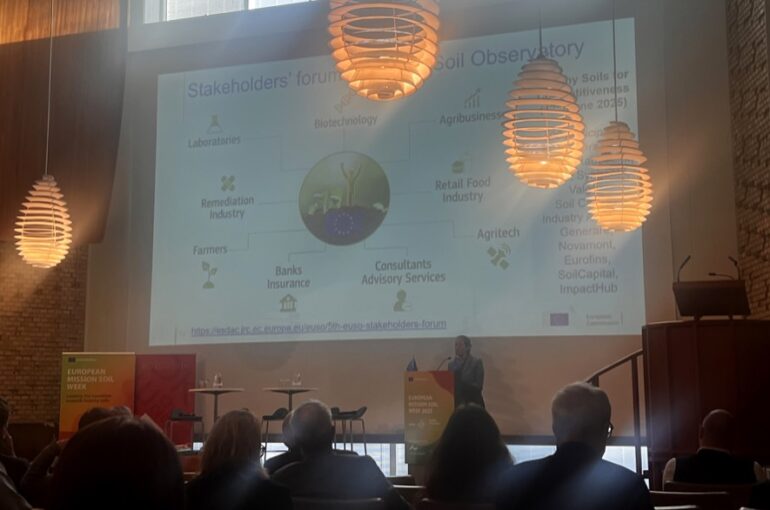
The Greek Living Earth project took part in the European Mission Soil Week 2025, held on 5–6 November in Aarhus, Denmark, hosted by Aarhus University. The project’s participation aimed to showcase its progress and activities within the European context of the Soil Mission initiative.
Mission Soil Week is the annual flagship event of the “A Soil Deal for Europe” initiative, bringing together researchers, policymakers, agricultural professionals, and organizations working on the protection and restoration of soil health. This year’s edition focused on the transition to healthy soils through innovative funding models and sustainable landscape management approaches.
During the event, the Greek Living Earth team presented the project’s vision, scope, and current progress, highlighting its integrated approach combining satellite data, field measurements, and digital soil health indicators. In parallel, the team held discussions and exchanged views with consortia from other Horizon Europe projects and with institutional actors active in agroecology, citizen science, and soil monitoring technologies. These interactions explored opportunities for collaboration and synergies in areas such as data sharing, protocol harmonization, and indicator development.
The event offered broad networking opportunities, particularly with research centres and organizations developing Environmental Intelligence solutions, in-field spectroscopy systems, and applications based on Copernicus data — all of which align with the core objectives of the project. In this context, Greek Living Earth’s approach — linking remote sensing, artificial intelligence, and on-the-ground data — was recognized as a critical pathway forward.
The insights gained through presentations and exchanges provided valuable guidance for the next implementation phases of the project, including:
- strengthening data interoperability,
- integrating results into EU-level soil monitoring platforms, and
- connecting local actions with broader landscape and land-use strategies.
Overall, the participation was deemed highly beneficial, enhancing the project’s visibility, opening up new collaboration prospects, and offering key insights into the evolving landscape of the EU Soil Mission.